Will you actually see the aurora tonight?

Every aurora app tells you whether there is a geomagnetic storm. None of them tells you whether you will see anything — from where you are standing, with those clouds, that moon and that city light.

That is the only question that matters when you are standing outside at minus fifteen. It is the one we are answering.

Be there for the first night

AuroraFox launches in October. Leave your email and be among the first in.

Where will you be watching from? — optional
77%
Seen from space, it works
The official model gets it right 77 times out of 100 — when you check it against satellite images.
Machol et al. 2012
50.3%
Seen from the ground, it does not
The same model, checked against people standing outside looking up. That is a coin toss.
Kosar et al. 2018
91%
What fixes it
The same model, once you feed it 500 reports from real observers. That jump is what AuroraFox is building.
Case et al. 2016
The 27-point gap

Those 27 points are not physics. They are your sky.

A satellite looking down through the top of the atmosphere sees the aurora perfectly. You, looking up from a road outside Tromsø, are fighting low cloud, a bright moon, the glow of a town behind you, the direction you happen to be facing, and how long your eyes have been in the dark.

Nobody has closed that gap operationally. Every app on the market predicts the aurora. AuroraFox predicts whether you will see it.

How it works

Two numbers, never mixed together

Most apps collapse everything into a single score. We keep the two questions apart, because they lead to two different decisions: if the Sun is quiet, stay in and get some sleep. If the Sun is strong and the only thing in the way is a layer of low cloud, it is worth moving — and one number on its own can never tell you which of the two you are looking at.

Aurora index

Is there an aurora?

Other apps fire the alarm on a five-minute spike, and a five-minute spike is not a storm. That is why they cry wolf. We measure the solar wind a million and a half kilometres upstream and give it four hours of weighted memory, so the energy has to genuinely build before we wake you. Fewer alerts — and the ones that arrive mean something.

Sky index

Will the sky let you see it?

Cloud layer by layer, because high cirrus barely matters and low stratus ends the night. Moon phase and altitude. Light pollution. Real darkness — not sunset.

AURORA  ×  SKY  /  100  =  FoxScore

One honest number, with an uncertainty range and a plain sentence telling you whether it is worth putting your boots on.

Design in progress

This is roughly what it looks like

Not screenshots — the app is not finished. These are the three screens we already know will exist, because they are the three moments that matter: the night that is worth it, the alert that wakes you, and the night the sky says no. The visual design will change. What these screens say will not.

Draft
22:47●●●
AuroraFox Tromsø
Tonight
74± 8
Worth going out. Best window between 23:40 and 01:20.
Aurora88
Sky84
Hour by hour
22
23
00
01
02
03
Cloud12% low
Moon18%, sets 01:05
Darknesssince 22:12
Bz−11 nT, south
Updated 40 s ago DSCOVR · live

The forecastTwo indices kept apart, and the four things that decide the night.

Draft
23:52●●●
FoxScore 91 — go out now
AuroraFox · now
Alert · 23:52
Bz has been pointing south for forty minutes and the energy has built up. From where you are, look north, a little above the horizon.
Clear overhead until about 01:30. Mid-level cloud after that.
The Moon is not in your way: it is below the horizon.
Give your eyes fifteen minutes before you judge the night. Most people give up before they can see.
Updated 40 s ago DSCOVR · live

The alertWritten for where you are standing, not a generic Kp number.

Draft
21:30●●●
AuroraFox Fairbanks
Right now
9± 4
Stay in. The aurora is up there. The problem is your sky.
Aurora86
Sky11
Low stratus at 94% directly over you. High cirrus would barely matter. This does.
Hour by hour
21
22
00
02
03
04
The model opens a gap around 03:40. If it holds, we will wake you.
Updated 40 s ago DSCOVR · live

The honest noNo other app will tell you this. It is the whole reason we exist.

What we promise

Honest, or it is worth nothing

  • The alert is free. Always. Charging for the one thing that matters is what killed the apps before us. You will never pay to be told the sky is on fire.
  • Thirty to sixty minutes of warning, and we say so. Anyone promising you a reliable three-day aurora forecast is selling you a horoscope. The physics does not allow it.
  • We tell you when we do not know. When the satellite upstream goes quiet, other models silently fall back to a worse method and keep showing you a number. Ours says so on screen.
  • We publish our accuracy every year. Every forecast is recorded and scored against what actually happened. If we are wrong, you will read it from us first.
  • No ads. Not one.
Who is behind this

Two people who have spent a lot of nights out there

AuroraFox did not come out of an office. It came out of hundreds of nights outside — plenty of them with the sky shut, the aurora directly overhead, and nothing at all visible from where we were standing. That specific frustration is what this app is trying to fix.

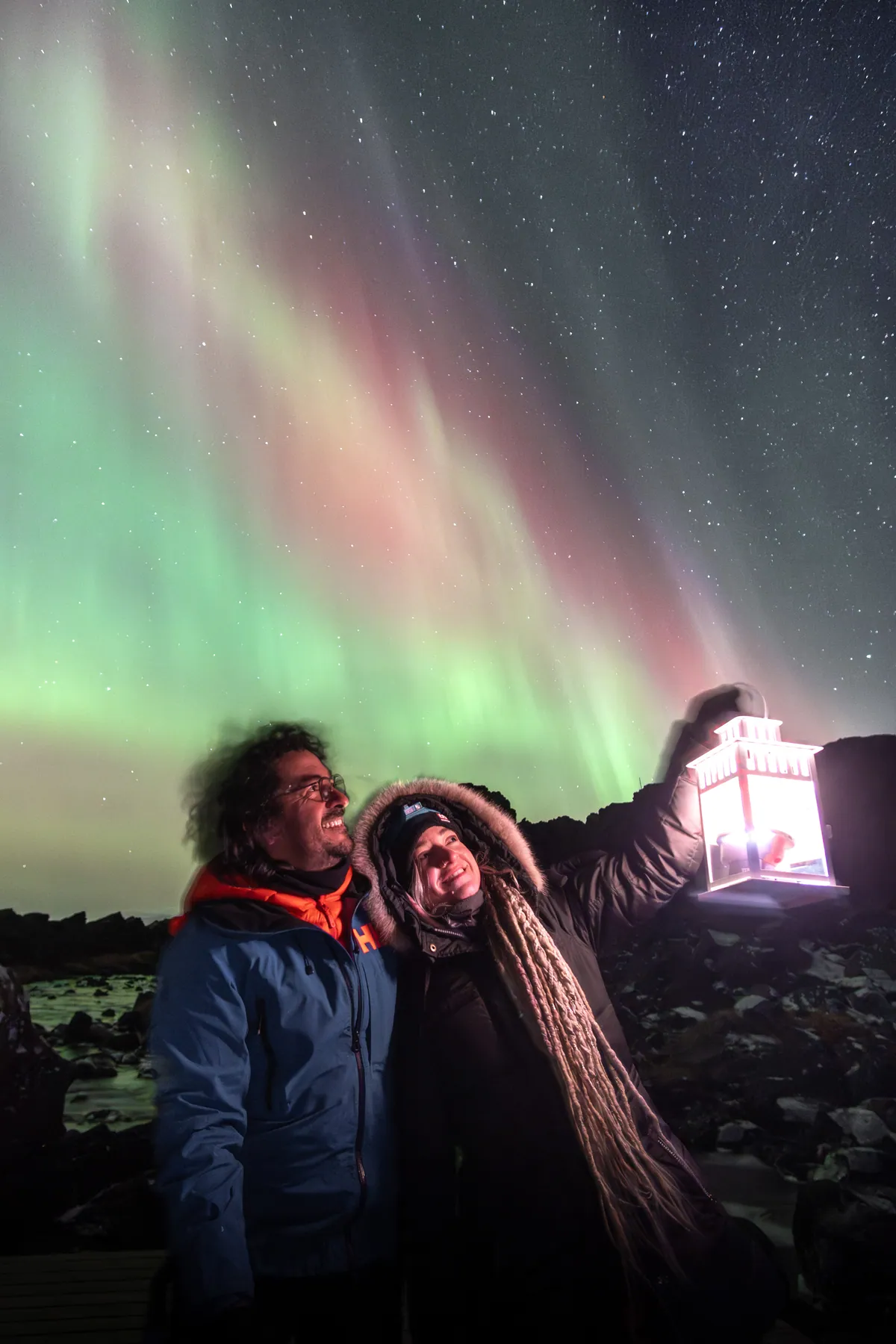
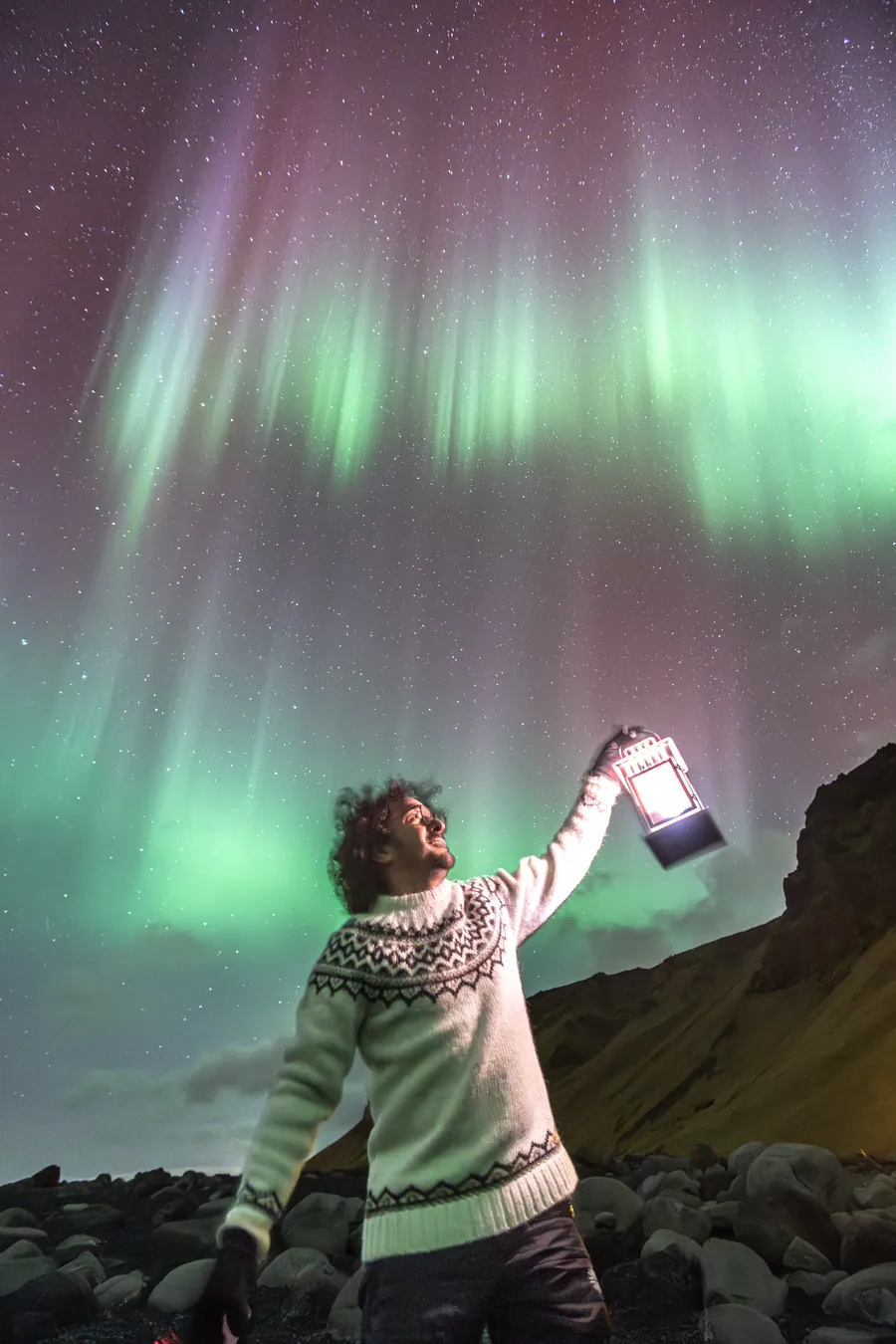
Mario Carvajal raising a lantern under green and violet aurora rays.

Mario Carvajal

Photographer · user-centred design

Born in Cali, Colombia; lives in a village of six hundred people on Prince Edward Island. Before the aurora he worked in user-centred design, and holds a master's in scientific imaging. A full-time photographer since 2011, leading expeditions to Iceland since 2022, and currently writing The Book of the Aurora. He does not believe you have to deserve the lights. He believes in Bz, in low cloud, and in going out a lot of nights.
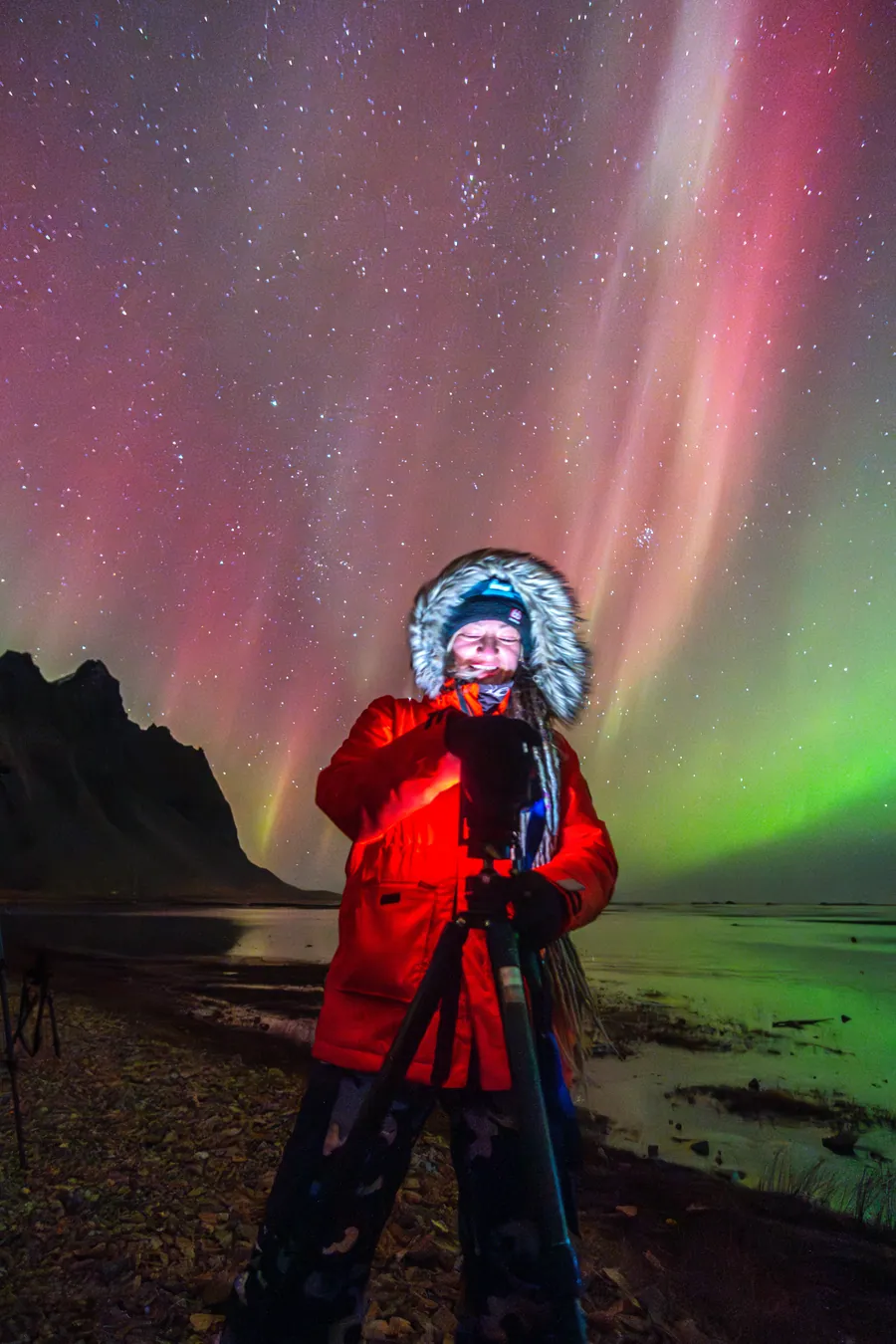
Cari Letelier in a red parka behind her tripod, under red and green aurora on the coast.

Cari Letelier

Photographer · engineering

Born in the Dominican Republic, raised in Santiago de Chile. An industrial engineer with a postgraduate certificate in logistics from MIT, she left that world at the end of 2018 to work full time on astrophotography. Everything she knows about auroral physics she taught herself — papers, trial and error, and a great many nights outside. Two of her images have been NASA Astronomy Picture of the Day, and her work has been recognised by Milky Way Photographer of the Year and Astronomy Photographer of the Year. Mystical stories about the aurora irritate her: to her it is the relationship between the Sun, the solar wind and the magnetosphere — and understanding it does not make it one bit less extraordinary.

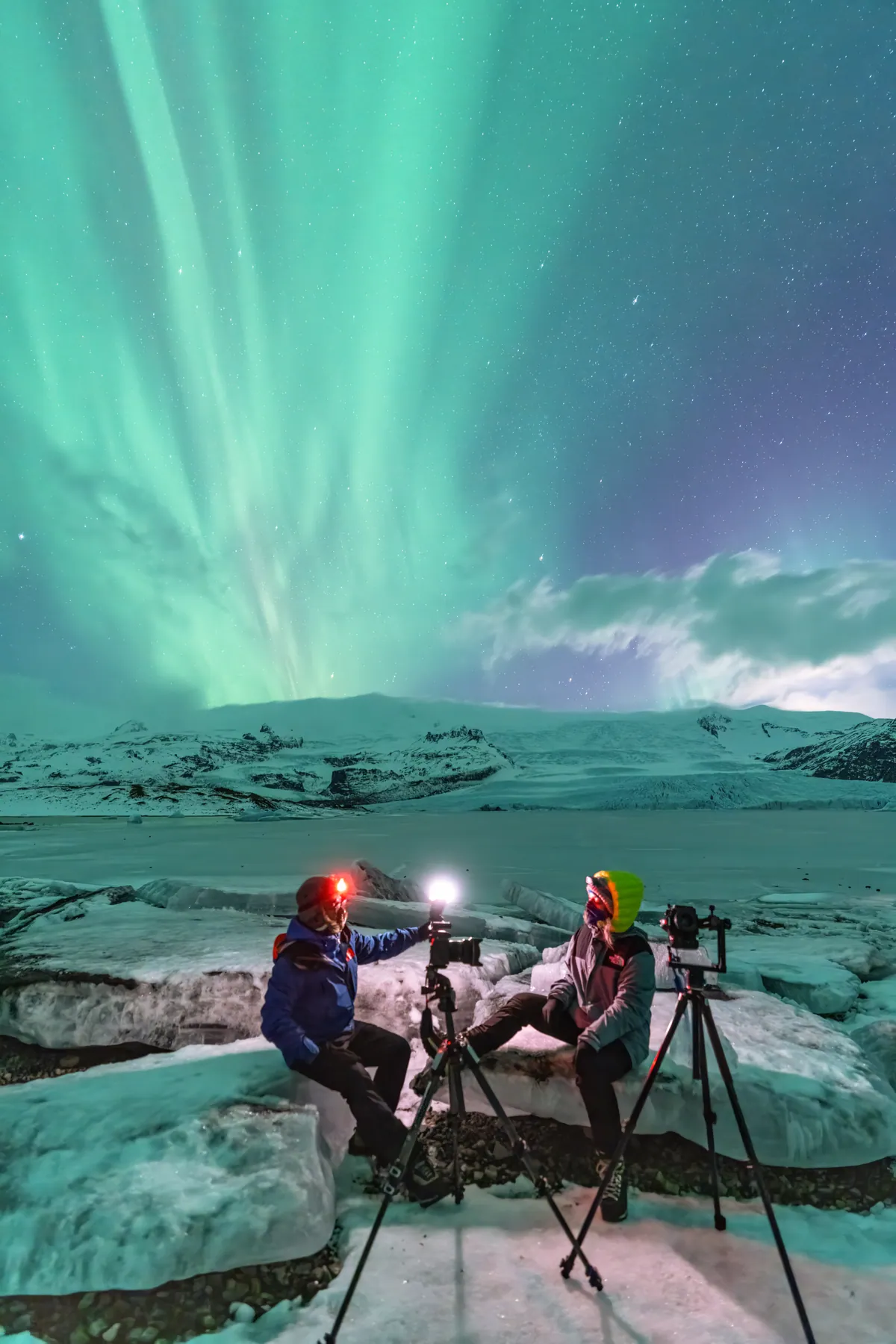
Cari and Mario with headlamps on, working with two tripods on glacier ice under a green aurora.
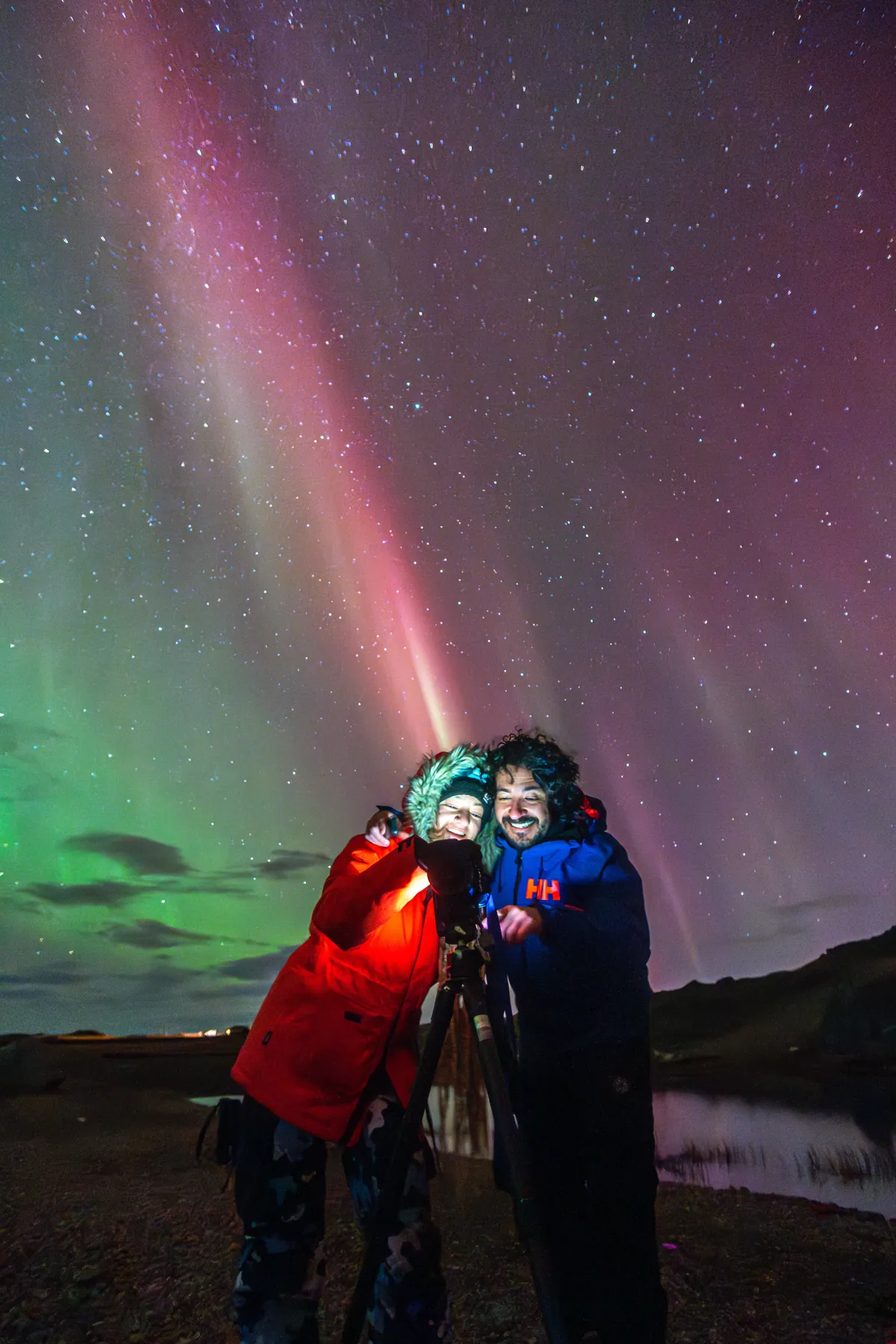
The two of them laughing behind a camera under red and green aurora rays.
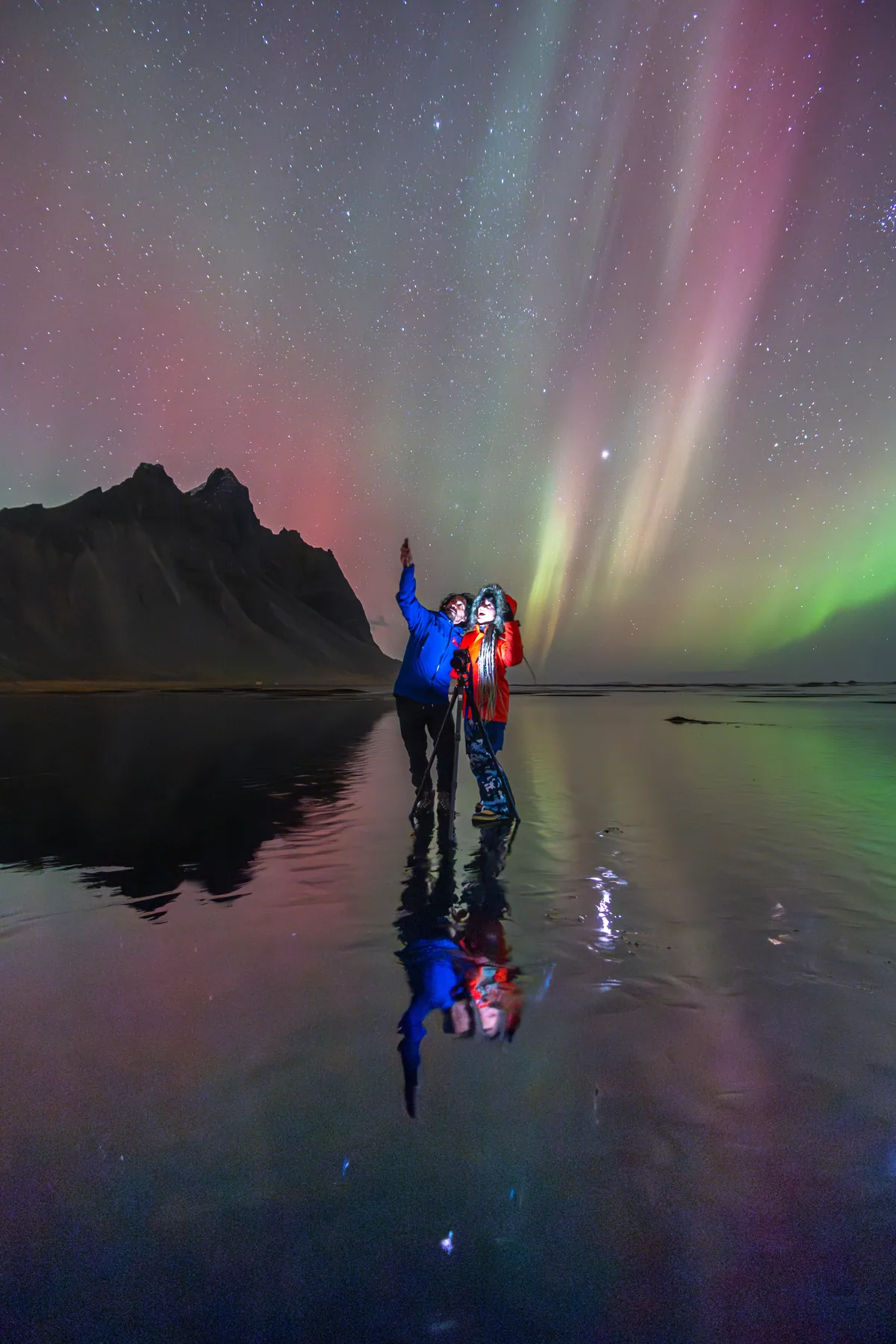
Two tiny figures beside a tripod under a pink and green aurora mirrored in still water.
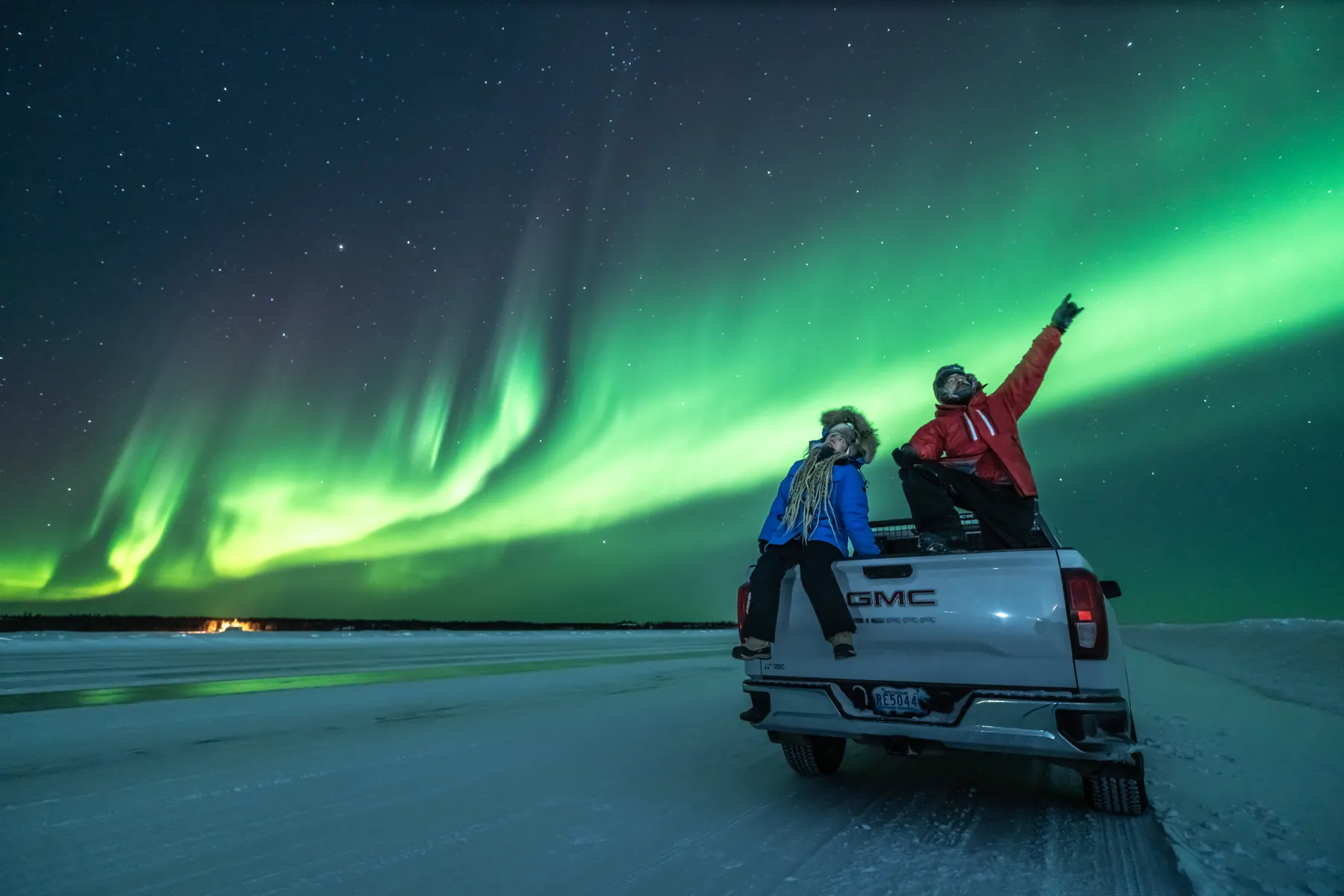
The two of them on the tailgate of a pick-up, pointing at bands of green aurora.
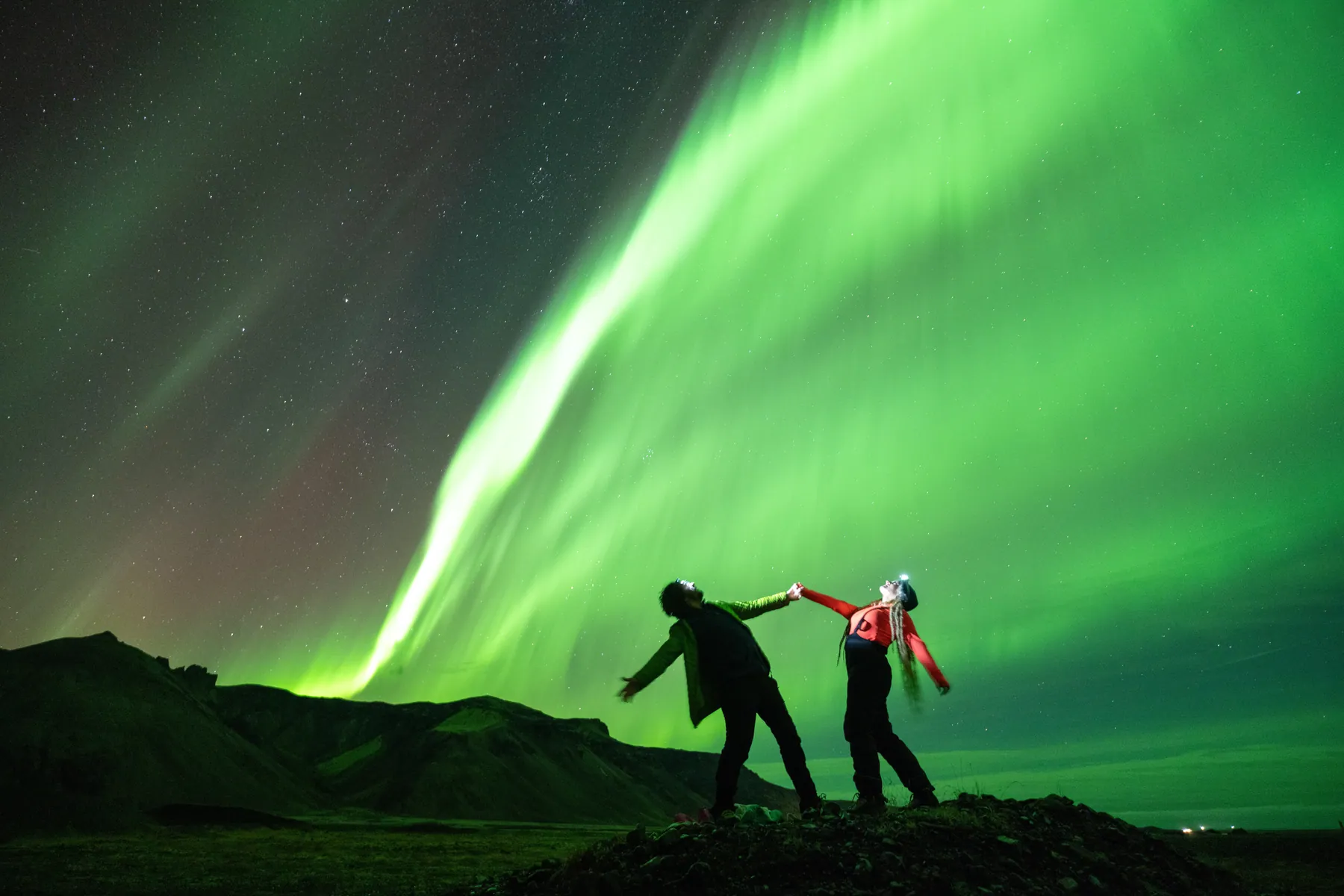
Two silhouettes holding hands on a ridge under a wide green band of aurora.
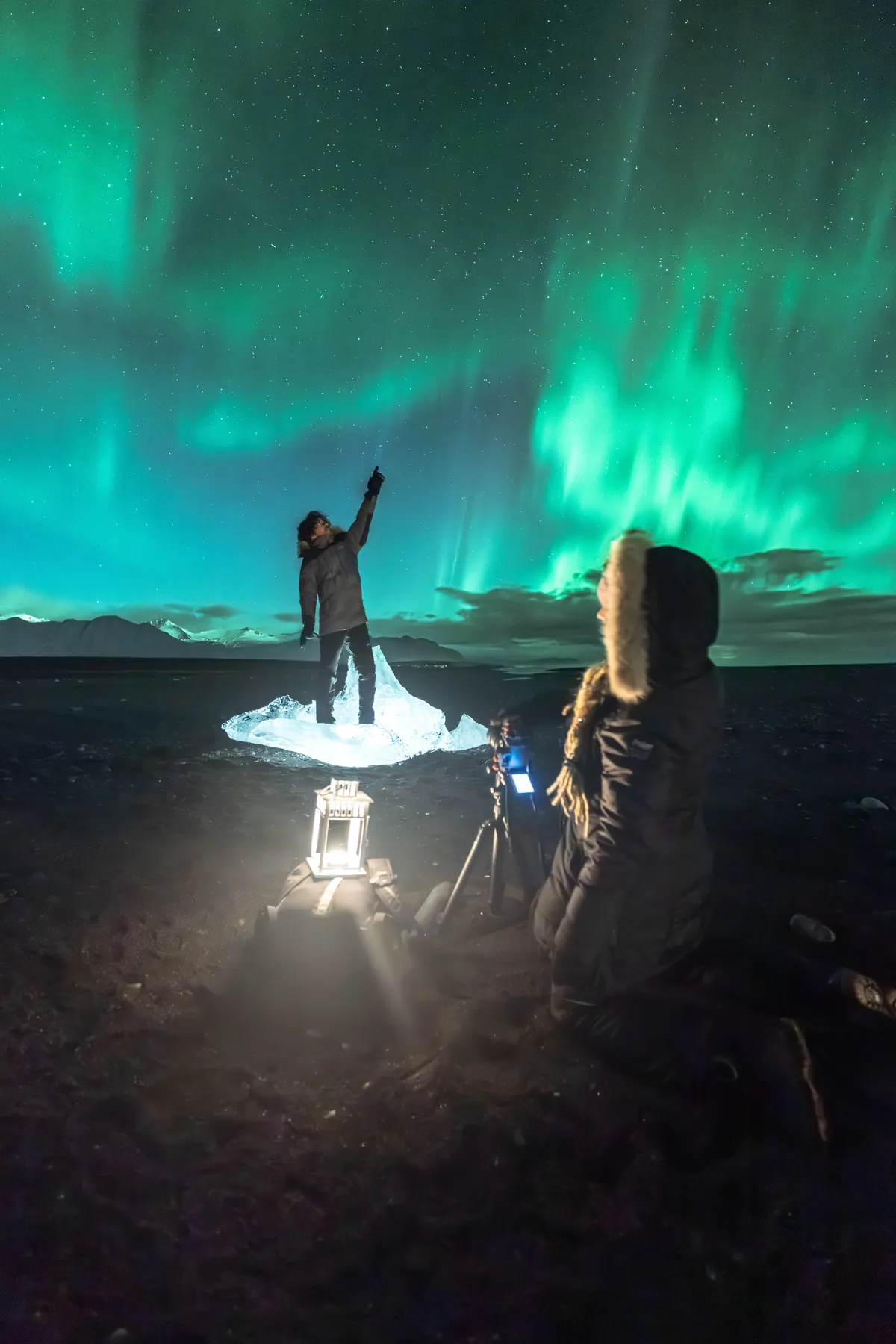
One of them pointing at the sky beside a tripod under red and green aurora.
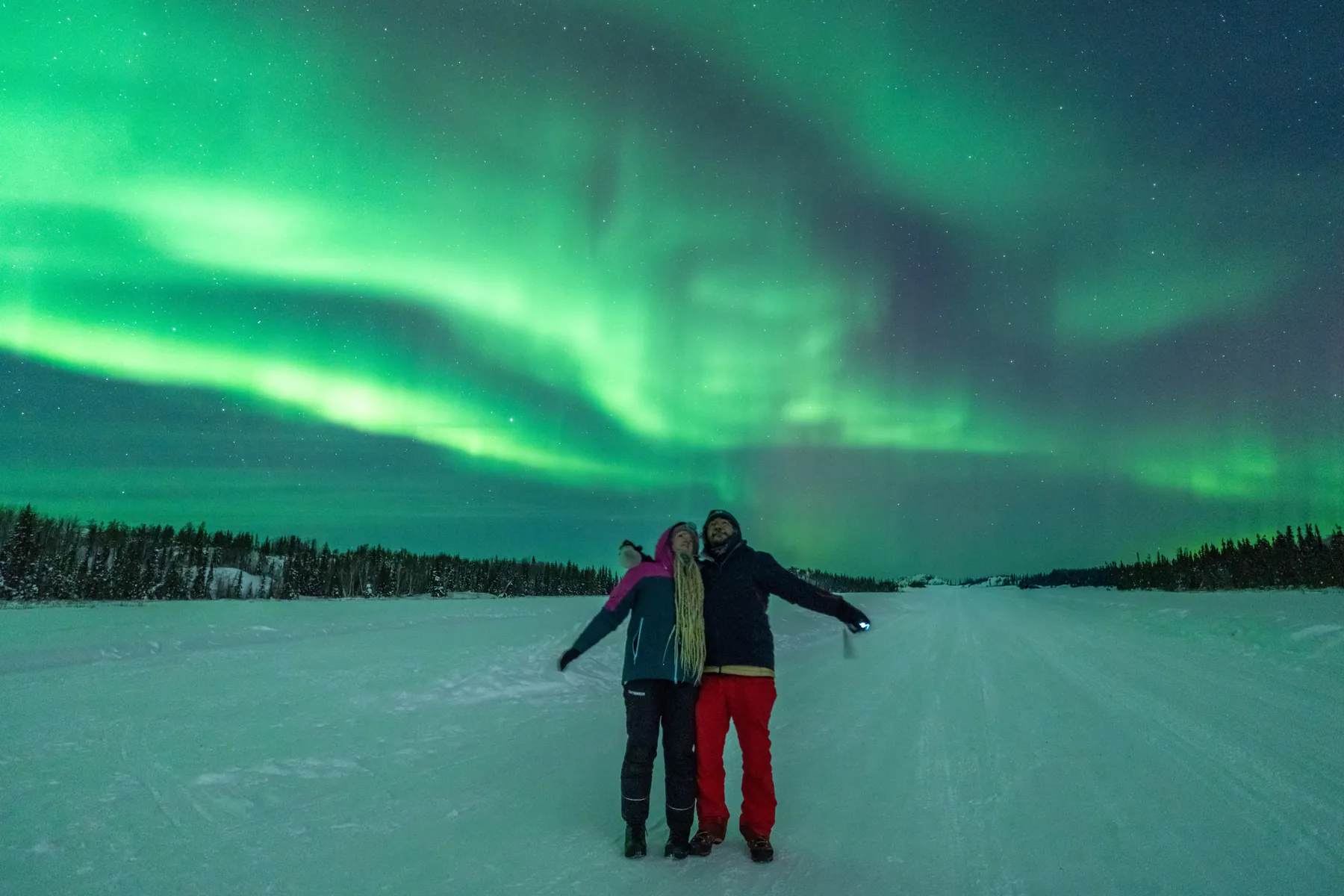
The two of them with arms open on a snowy road under bands of green aurora.
The two of them beside a lit panel under green and pink aurora by the sea.

Working. Most of what we know we learned on nights that did not work out.

Photos by

Mario Carvajal

Landscape as an anchor, artificial light used on purpose, and someone in the frame for scale.
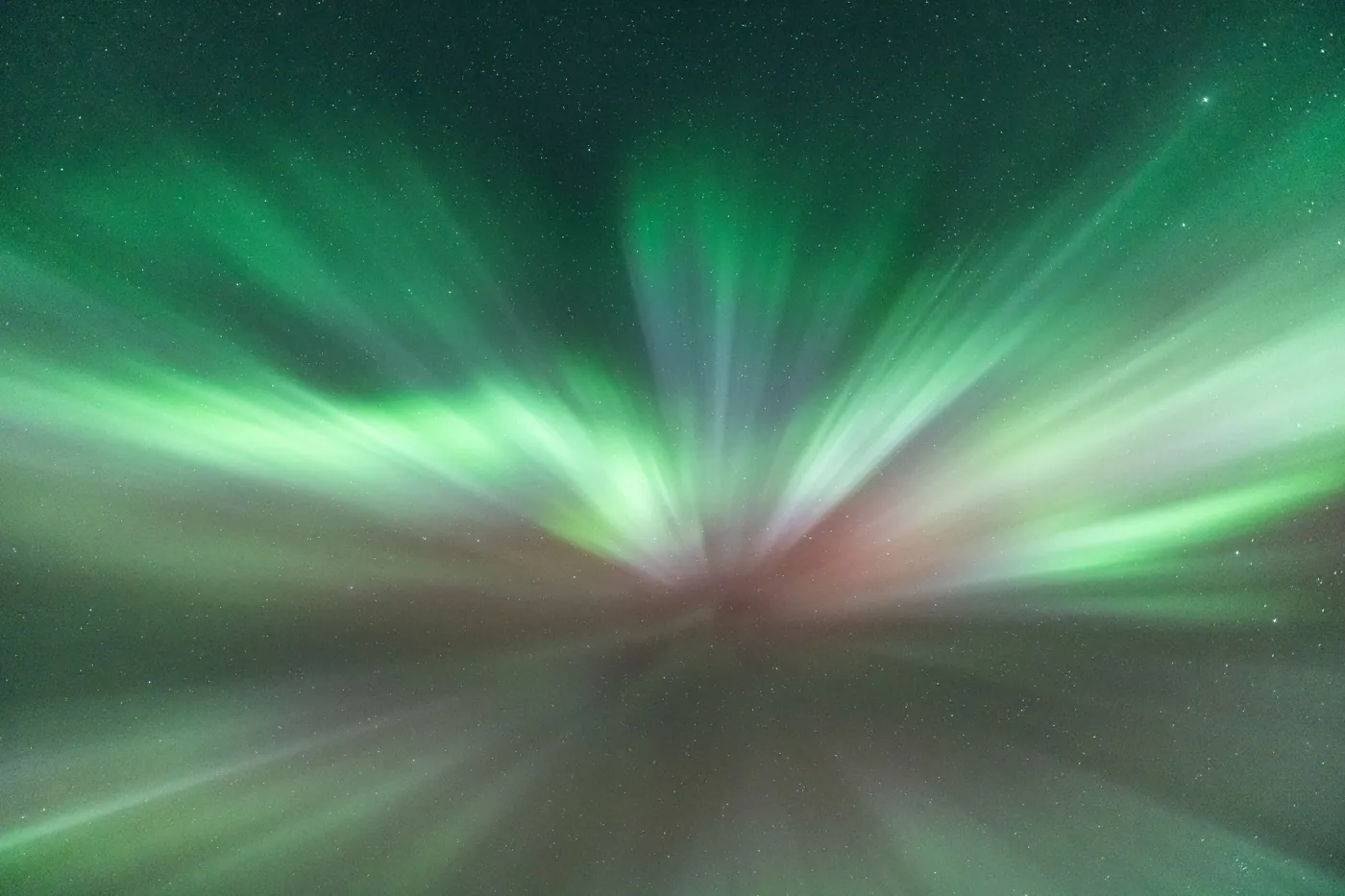
Aurora corona: green rays converging at the zenith.
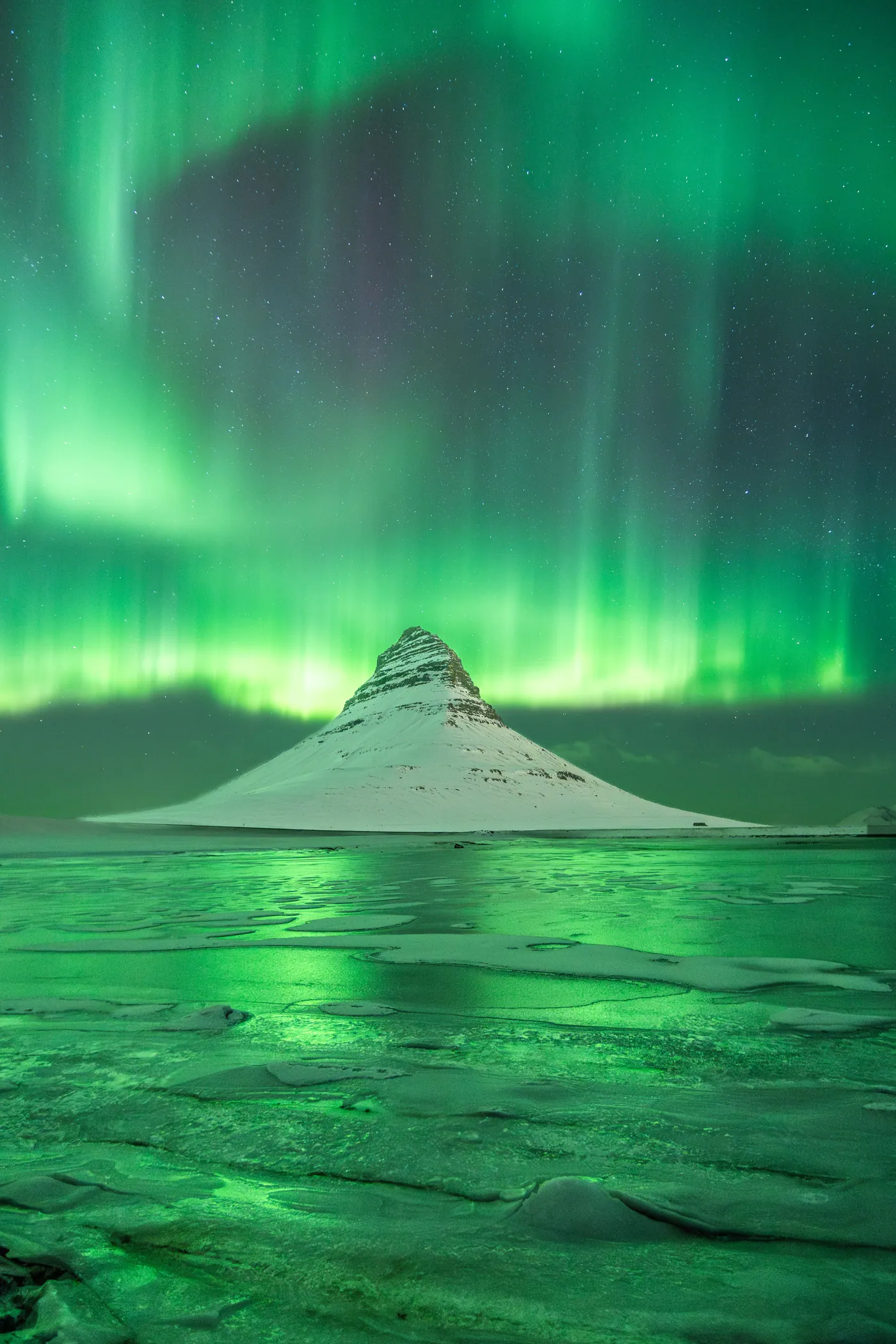
Green aurora over a conical mountain reflected in still water.
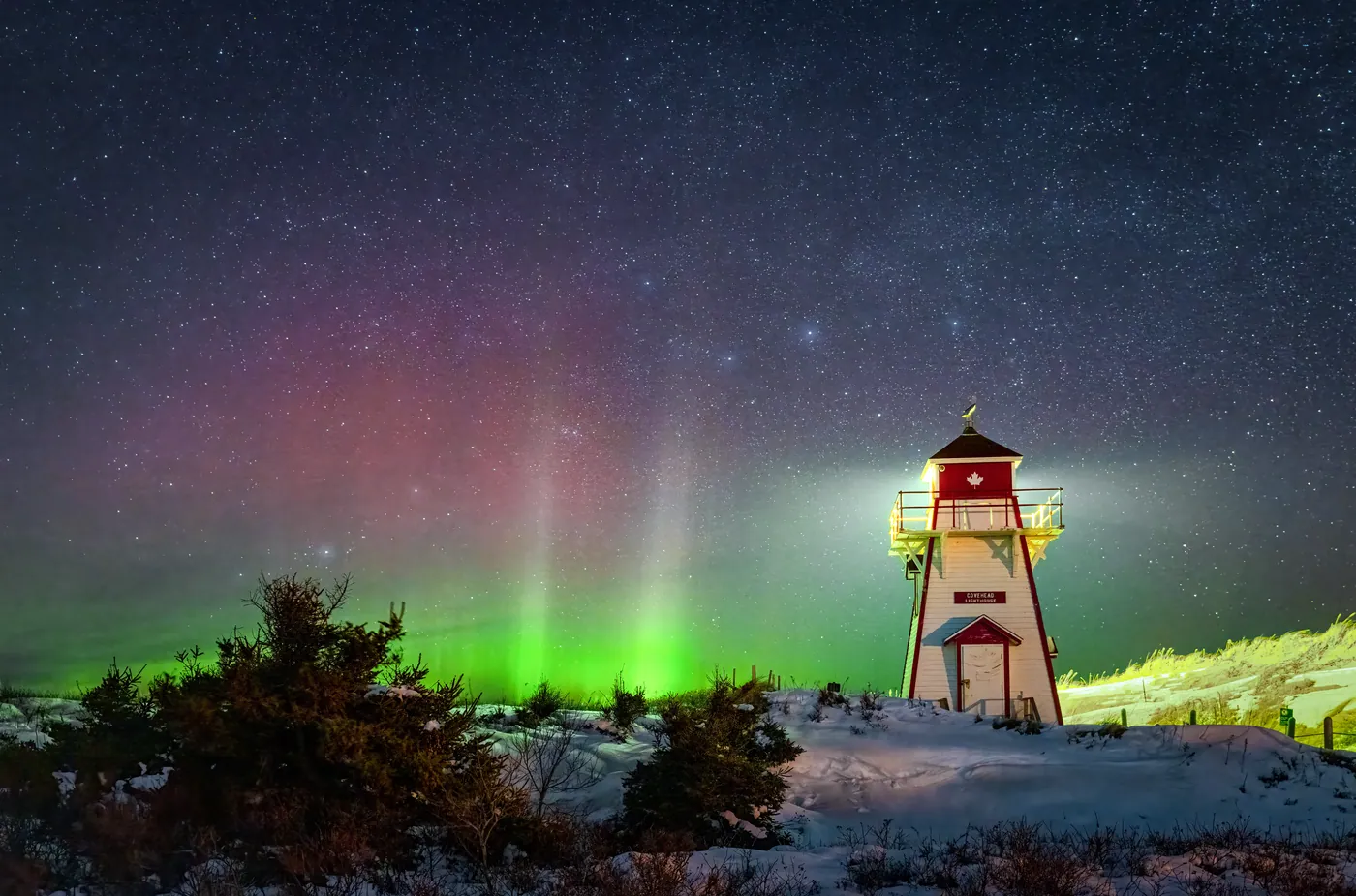
A red and white lighthouse in the snow with green aurora low on the horizon.
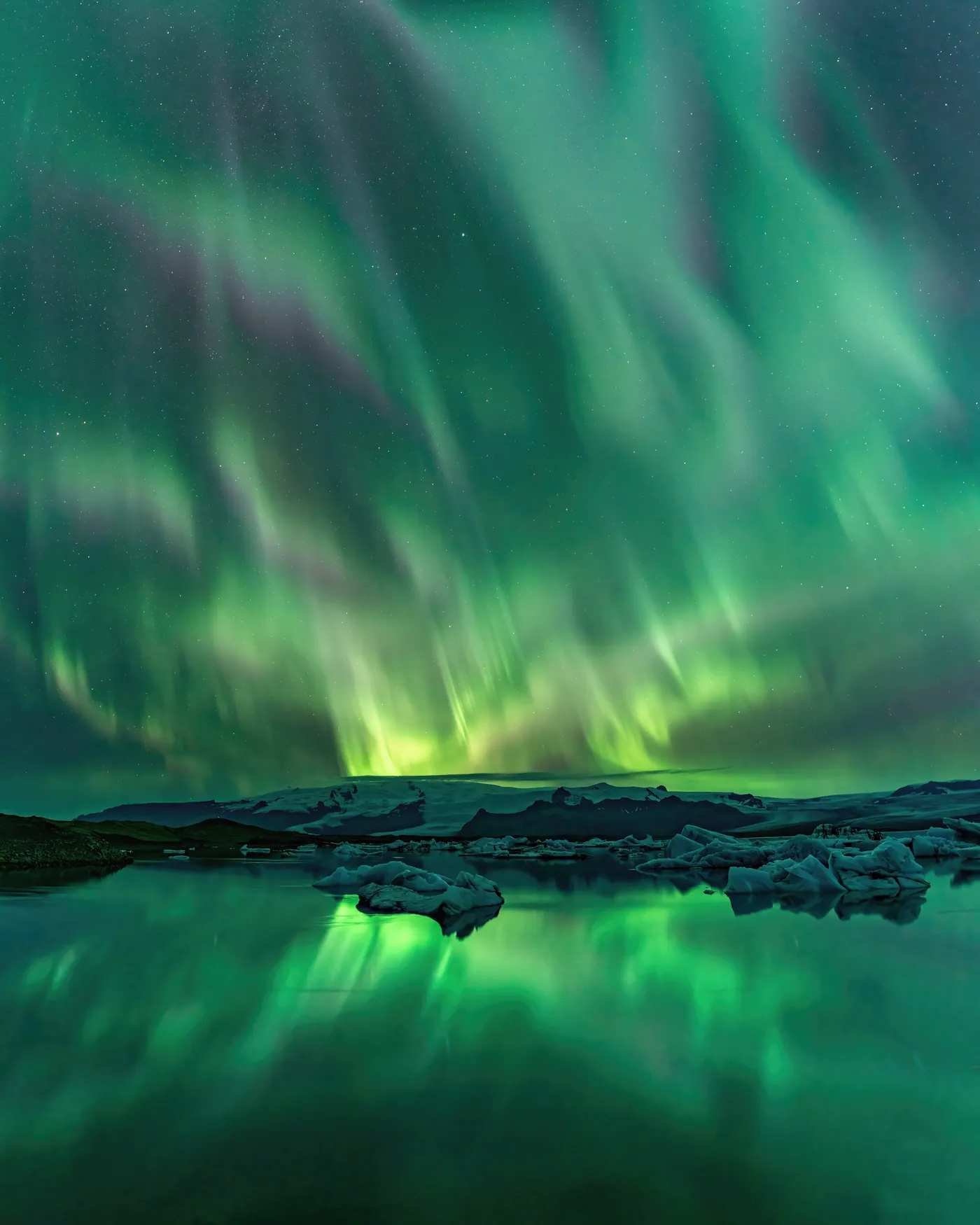
Green rays over a glacier lagoon, mirrored between the icebergs.
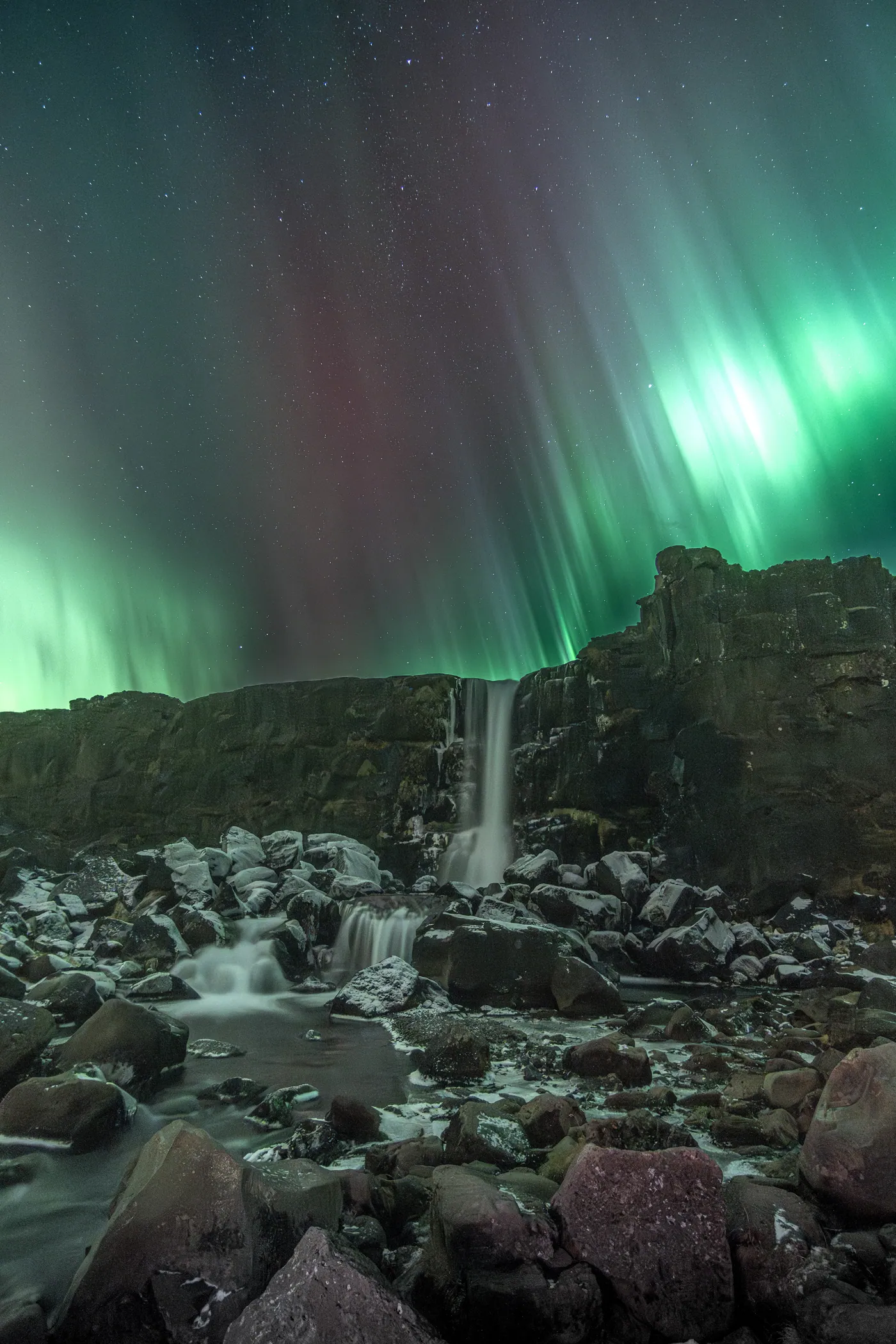
A waterfall between rocks under green and red aurora rays.
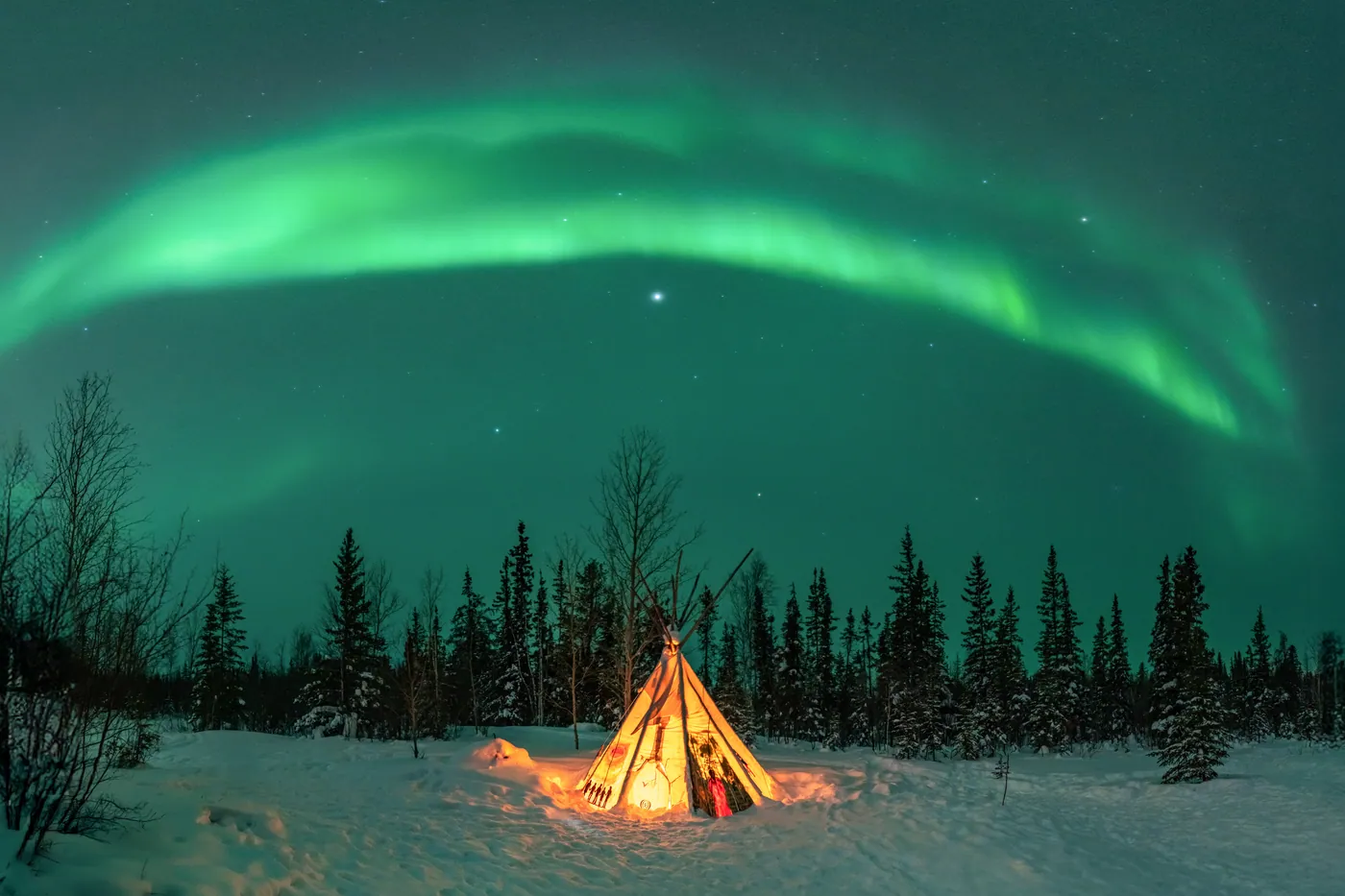
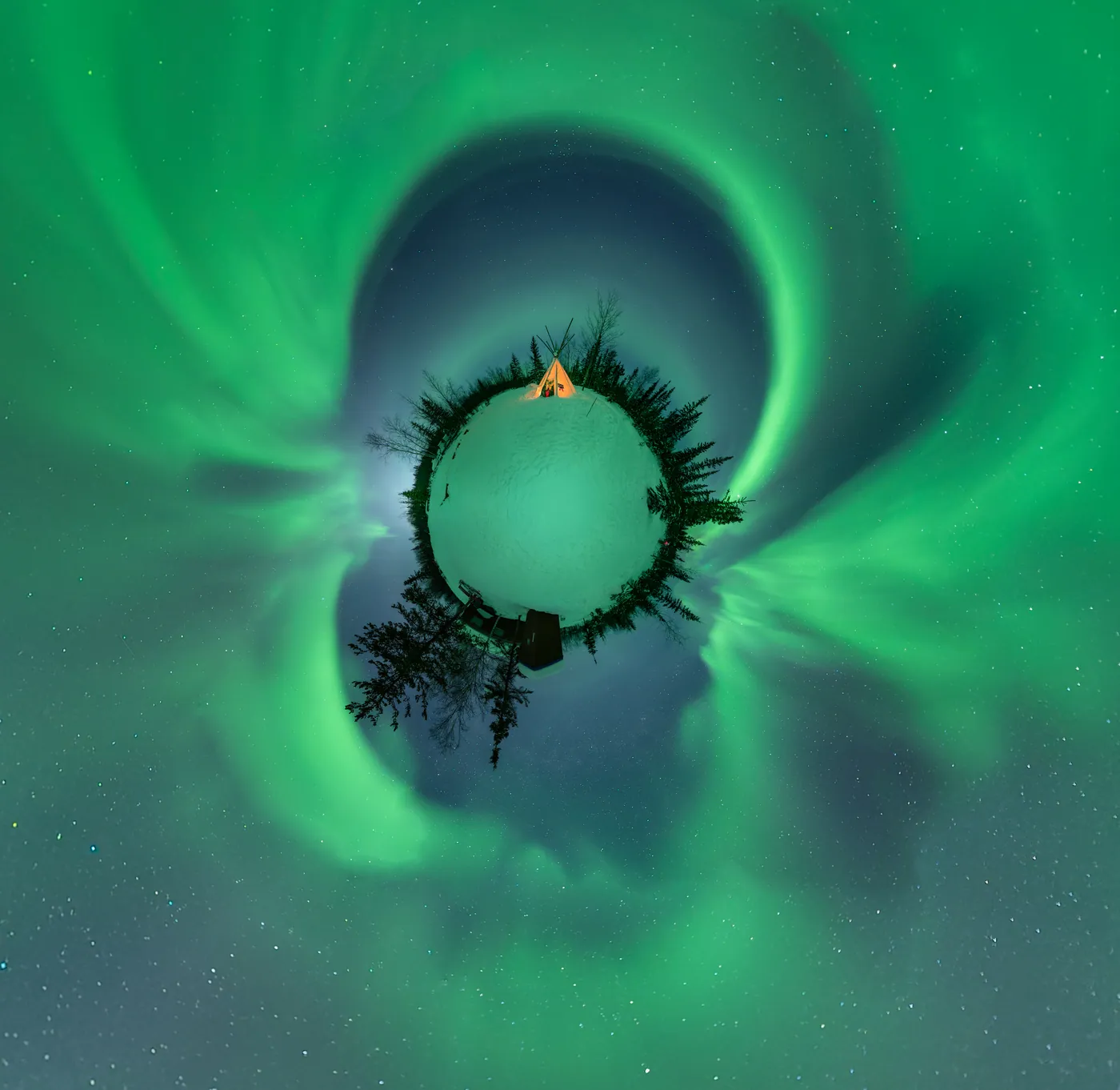
A lit tipi in a snowy forest under an arc of green aurora.
Photos by

Cari Letelier

Coronas, extreme wide angles, and projections that are not the ones you would expect.
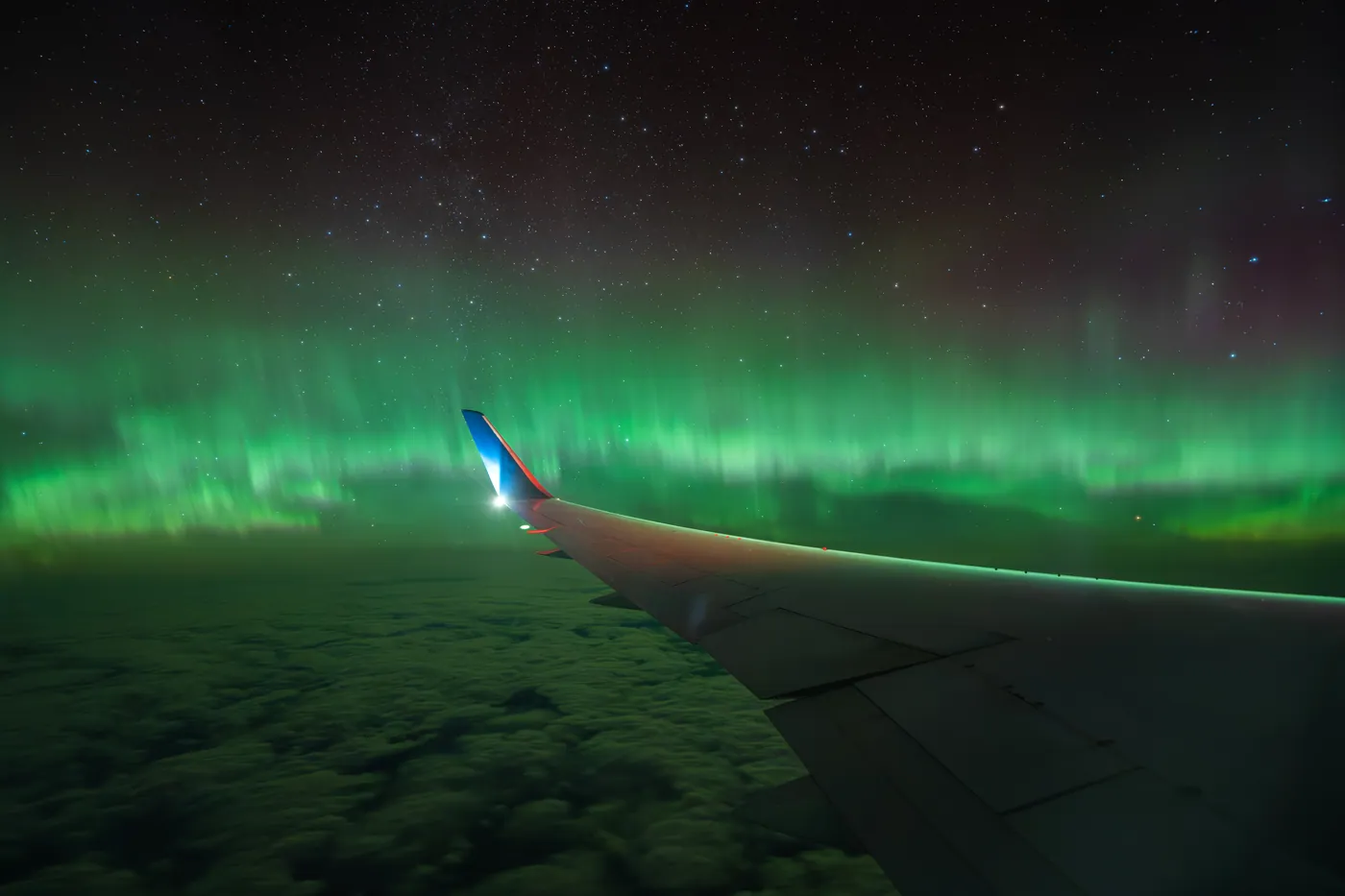
Aurora seen from an aircraft window, above the cloud, with the wing light lit.
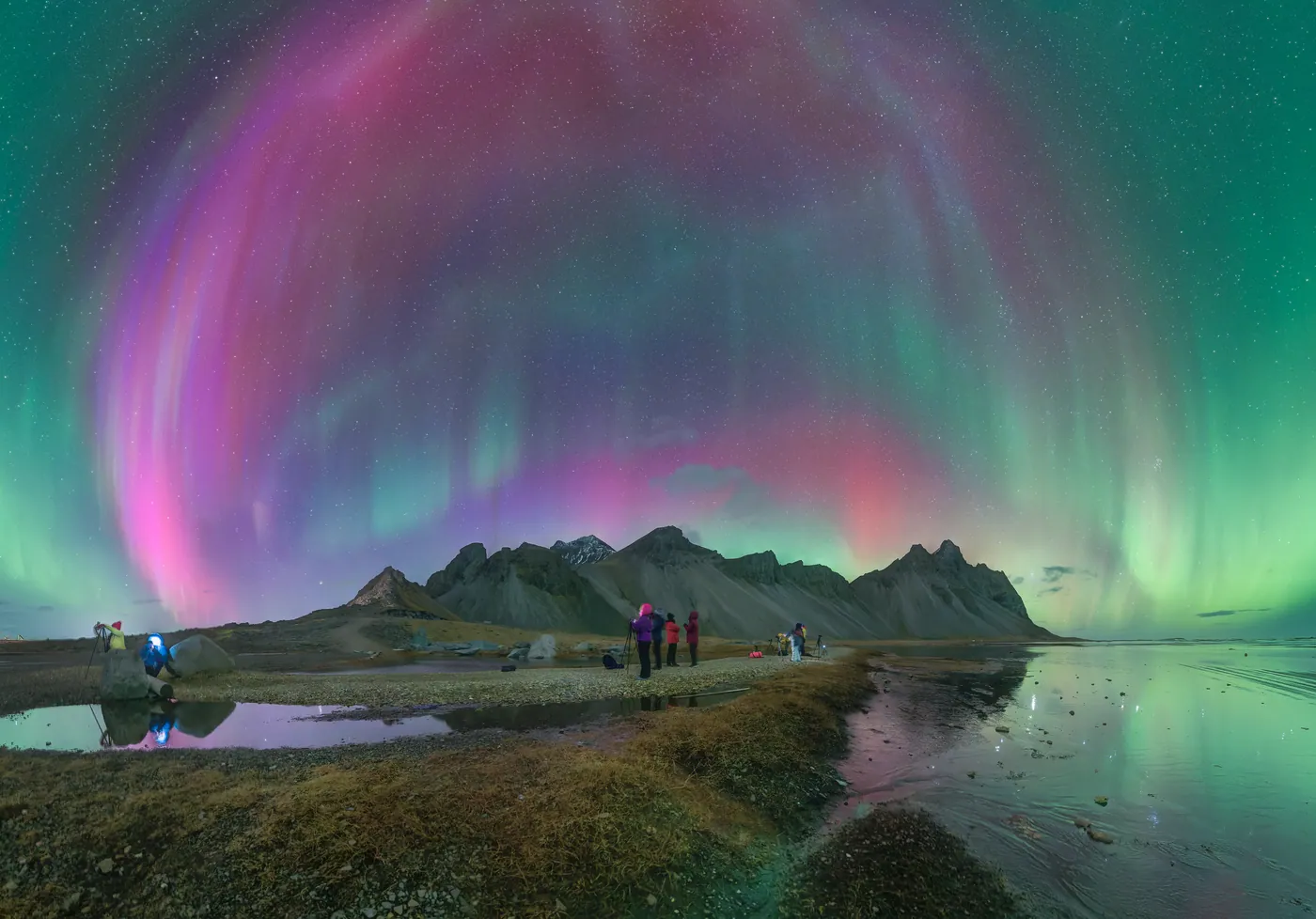
A pink and violet corona over jagged peaks, with small figures and their reflection.
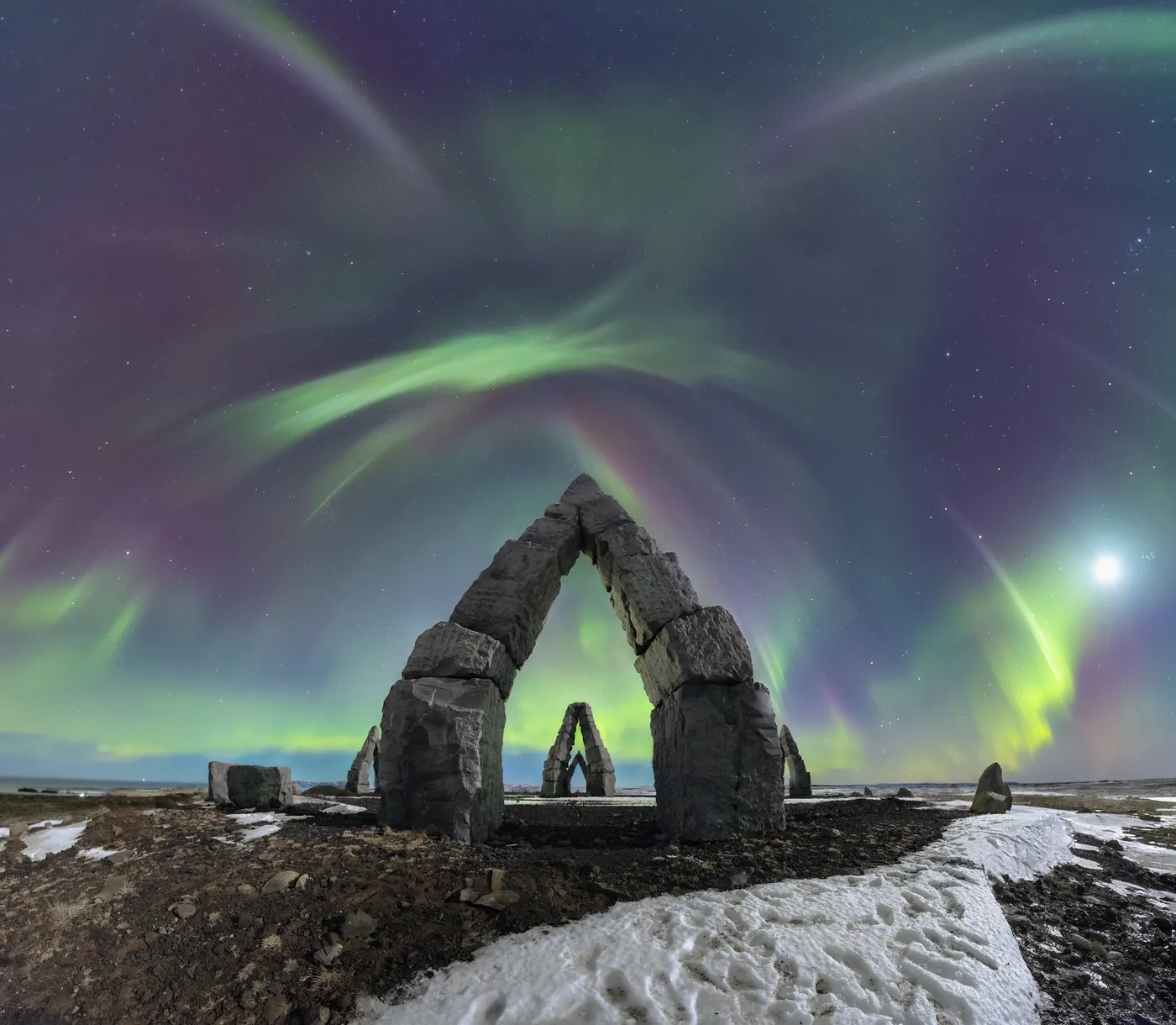
A stone arch under violet and green aurora.
Little planet projection: the horizon curled into a circle inside a green corona.
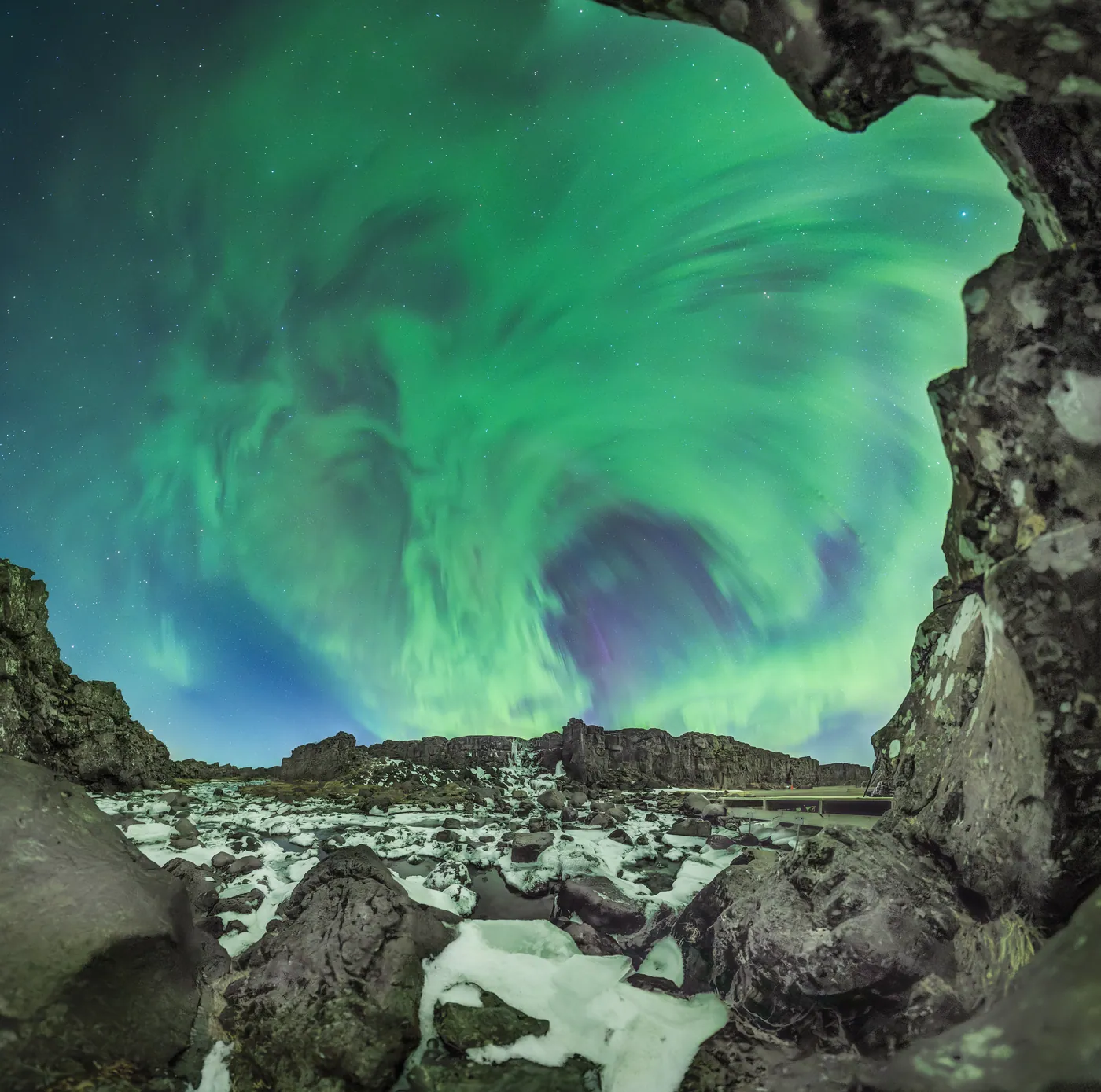
A green spiral of aurora seen through the opening of a rock cave.
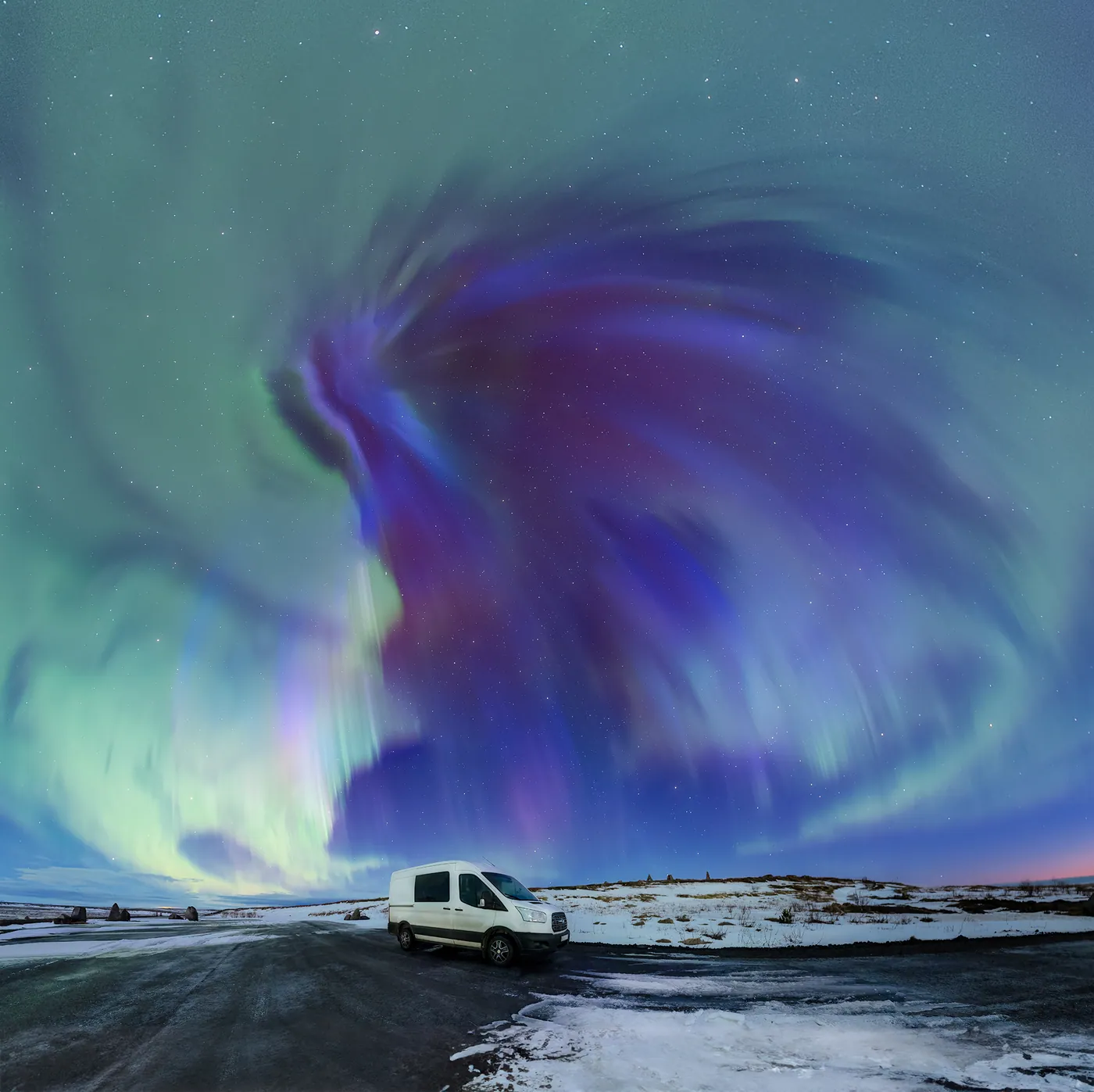
A violet and blue corona breaking open above a van parked on a snowy road.
Season 2026 / 27

The best nights tend to arrive now

Solar maximum has passed — all but confirmed to have happened across 2024 and 2025. That does not close the season, and it is worth knowing why. Historically the strongest events of a cycle arrive after the maximum, sometimes years after it: the most powerful flare of the previous cycle was recorded two years late. Nobody can honestly tell you how many good nights are left. What the record does say is that the declining phase has produced, again and again, some of the best.

Sources: joint NASA / NOAA solar maximum announcement, 2024 · Met Office, 2026.

Leave me your email →